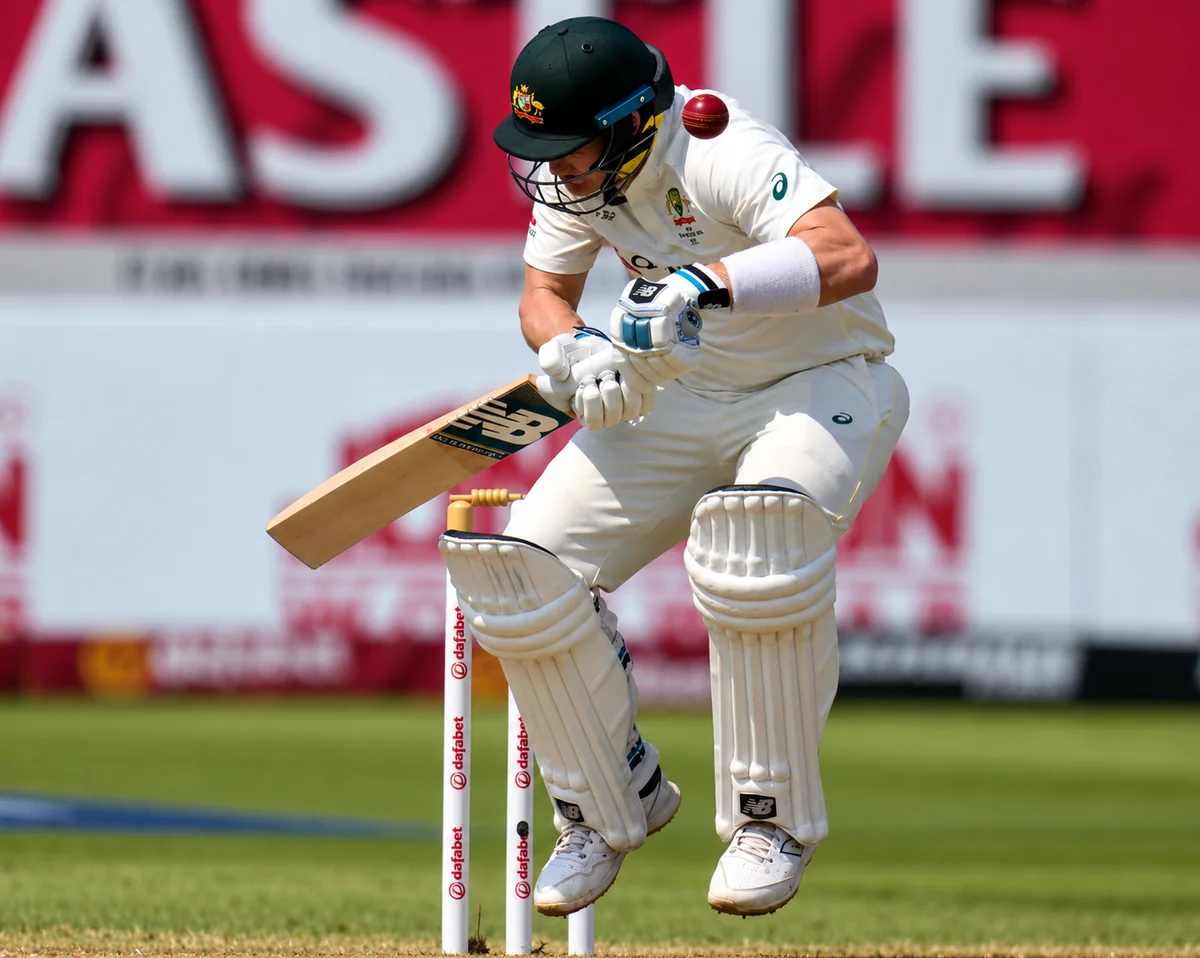
South Africa went into the final session of the second Test in Gqeberha needing four Australian wickets to level the series. At tea on day five, Australia were 253 for 6 in their second innings, still 73 runs behind, after a remarkable match built on Temba Bavuma’s 179 and a devastating spell from Marco Jansen.
Key points
- South Africa recovered from 110-6 to declare on 425-9, led by captain Bavuma’s 179
- Simon Harmer’s 82 broke Dale Steyn’s 18-year-old record for a South African No 9 against Australia
- Jansen took 5-33 as Australia were bowled out for 99 and forced to follow on
- Travis Head’s 121 led the fightback, but Australia still trailed by 73 at tea on the final day
- Australia won the first Test in Durban, so a South Africa win would level the series
A rain-hit start and a captain’s rescue
Australia won the toss and chose to bowl at St George’s Park, and for most of the first two days the decision looked inspired. Rain cut deep into the opening day, and when play was possible Scott Boland made the ball talk. Aiden Markram and David Bedingham fell in successive balls with the score on 12, Marques Ackerman and Matthew Breetzke soon followed, and South Africa were in deep trouble at 110 for 6.
That was when Temba Bavuma produced one of the great captain’s innings. Over more than nine hours at the crease he faced 334 balls, hit 18 fours and a six, and made 179. He first added 132 for the seventh wicket with Marco Jansen, who struck a brisk 85 from 100 balls, and then put on 183 for the eighth wicket with off-spinner Simon Harmer.
Harmer’s career-best 82 was historic in its own right. It broke Dale Steyn’s 18-year-old record for the highest score by a South African batting at No 9 or lower against Australia, set at Melbourne in 2008. South Africa eventually declared on 425 for 9, with Bavuma the last man out. Boland finished with 5 for 81, and Mitchell Starc took 3 for 89.
Australia skittled for 99
If the first half of the match belonged to Bavuma, the third innings belonged to South Africa’s seamers. Nic Maddinson fell to Kagiso Rabada in the first over, and the collapse never really stopped. Jansen ripped through the middle order to take 5 for 33, removing Travis Head, Matt Renshaw, Alex Carey and Beau Webster, while Wiaan Mulder bowled Steve Smith for a patient 28.
Australia were bowled out for just 99 in 42.3 overs, a first-innings deficit of 326. Mulder (2 for 14), Rabada (2 for 33) and Anrich Nortje all chipped in. It was one of the most dramatic swings of the year in Test cricket: from 110 for 6, South Africa had turned the game completely in their favour.
| Innings | Score | Top performers |
|---|---|---|
| South Africa 1st innings | 425-9 dec (127.1 overs) | Bavuma 179, Jansen 85, Harmer 82; Boland 5-81, Starc 3-89 |
| Australia 1st innings | 99 all out (42.3 overs) | Smith 28; Jansen 5-33, Mulder 2-14, Rabada 2-33 |
| Australia 2nd innings | 253-6 at tea on day five (92 overs) | Head 121, Boland 40*, Labuschagne 39; Rabada 3 wickets, Harmer 2 |
Head’s defiance
Following on, Australia needed a long rearguard to save the match, and Travis Head led it. After Maddinson fell early again, Head and Marnus Labuschagne (39) added 92 for the second wicket. Head went on to a superb 121 from 190 balls, with 15 fours, before Mulder bowled him with the total on 209.
Smith then fell cheaply to Rabada, and Harmer’s long spell of off-spin, more than 30 overs on a wearing pitch, kept the pressure on. Fast bowler Scott Boland, usually a tailender, showed remarkable stubbornness, facing more than 150 balls for 40, as Australia tried to bat out the final day.
The state of play
At tea on the final day, the equation was simple. South Africa needed four more wickets in the last session, while Australia needed to survive. Boland was unbeaten on 40 and Alex Carey on 12, with only the bowlers to come. Even if Australia clear the deficit, a small lead would leave South Africa with only a short chase in fading time.
Harmer was the key figure for the hosts. The off-spinner had already sent down more than 30 overs in the innings, removing Labuschagne and Webster, and a wearing fifth-day pitch gave him a real chance of finishing the job. Rabada, with three wickets in the second innings, and the second new ball were South Africa’s other main weapons.
The match in numbers
A few figures sum up how the second Test has unfolded so far:
| Stat | Detail |
|---|---|
| Highest score | Temba Bavuma, 179 (334 balls, 18 fours, 1 six) |
| Best partnership | 183 for the 8th wicket, Bavuma and Harmer |
| Best bowling | Marco Jansen, 5-33; Scott Boland, 5-81 |
| Australia’s best | Travis Head, 121 in the second innings |
| Record broken | Harmer’s 82 beat Steyn’s 76 (2008) for a South African No 9 or lower v Australia |
| Venue | St George’s Park, Gqeberha |
What it means for the series
Australia arrived in Gqeberha with a 1-0 lead after winning the first Test at Kingsmead, where Josh Hazlewood took six wickets. A South Africa victory would level the series and complete one of the most dramatic turnarounds of the year. From 110 for 6 on a rain-affected opening, the hosts went on to dominate the match.
For Australia, the match has raised awkward questions. Their batting collapsed for 99 on a pitch where South Africa made 425, and only Head and Smith passed 25 across their first two innings. Scott Boland’s five-wicket haul and battling innings were the main positives. Captain Pat Cummins went wicketless in South Africa’s first innings, conceding 96 runs.
Why it matters
- For South Africa: Bavuma’s 179 is one of the finest innings of his career, and the lower-order resistance from Jansen and Harmer showed the depth of the side.
- For Australia: the 99 all out is a rare collapse for one of the world’s strongest batting line-ups, and a rearguard was needed to avoid defeat.
- For the series: whatever the final result, South Africa have shown they can dominate Australia at home after losing the first Test.
Related reading
- Maddinson Blazes 48, Smith Struck on the Helmet as Australia Push Lead Past 200 in Durban
- Eight Wickets From a Clean Sweep: England Grind Through Pakistan's First Real Resistance at Edgbaston
- England bowl first against Pakistan as ODI tri-series begins in Rawalpindi