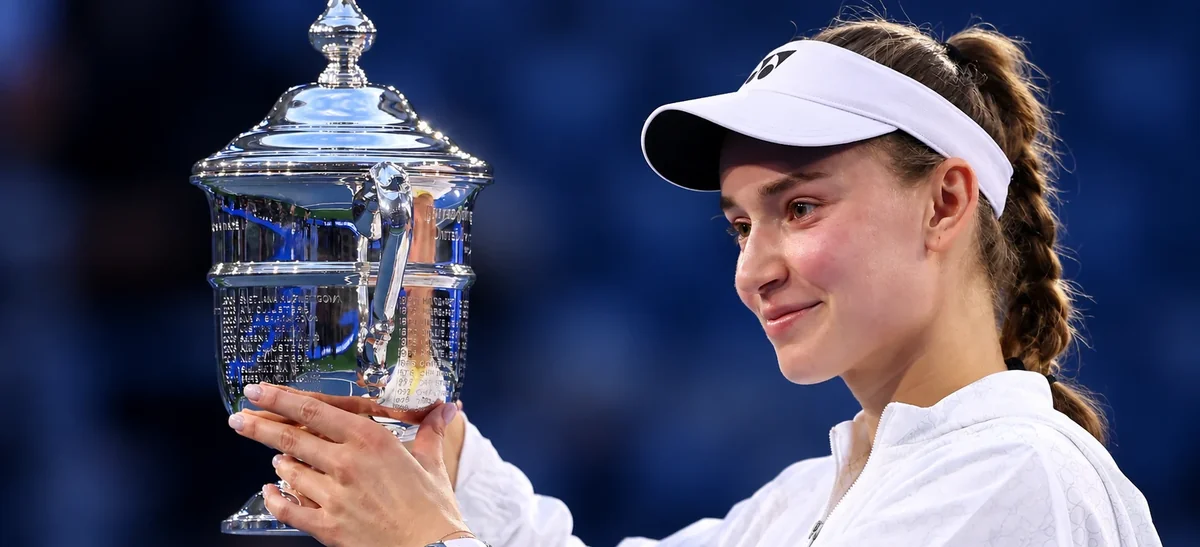
Alexander Zverev left New York with the US Open trophy, but a lot of the talk since has been about how long he takes to serve. His habit of bouncing the ball again and again before a second serve has split two American greats. Jimmy Connors says opponents should just ignore it. Andy Roddick says the rules need to stop it.
Key takeaways
- Zverev beat Ben Shelton in four sets in the US Open final, his second Grand Slam title of 2026 after Roland Garros.
- Players get 25 seconds between points, but there is no separate limit between the first and second serve.
- Connors counted Zverev's bounces at between 8 and 18 and says the answer is to not let it get to you.
- Roddick wants a shot clock for the second serve.
A champion with a slow routine
Zverev's win over home favourite Shelton made him a two-time Grand Slam champion within a few months, after he also won the French Open. The 30-year-old German was not a popular winner with everyone, though. Throughout the fortnight, fans and commentators complained about how long he took before serving, especially after a missed first serve.
What he does is within the rules. The 25-second clock starts at the end of a point, but nothing in the rulebook sets a time limit once the first serve has gone into the net or out. As long as he gets through both serves without breaking the main clock, Zverev can bounce the ball as many times as he likes.
Connors: "don't let what I do bother you"
The five-time US Open champion has some sympathy for Zverev. Speaking on his podcast, Connors admitted that he also had a fixed routine as a player. He called it OCD, or maybe superstition, and said he always had to finish on an even number of bounces. He actually counted Zverev's bounces during the tournament and said they usually landed somewhere between eight and 18.
Connors pointed out how much pressure players are under in big matches and said routines like this help them get ready for each point. He thinks Zverev will probably try to speed up, but warned that superstitions are hard to shake. He also mentioned that Venus Williams would never step on a line. His advice to opponents is simple.
"I never let what my opponent did bother me, so don't let what I do bother you."
— Jimmy Connors, five-time US Open champion
Roddick: close the gap in the rules
Andy Roddick sees it very differently. Because Zverev beat Shelton, Roddick is still the last American man to win the US Open, back in 2003. On the Served podcast he said there is no point blaming Zverev for staying inside the current rules. The rules themselves need to change.
His main point is that bouncing the ball more than 20 times between serves is one reason matches keep going into the early hours. He also highlighted a loophole: if a player starts the first serve with time left on the clock, the spare seconds are carried over, so the routine can effectively start again before the second serve.
"There needs to be a shot clock for the second serve. You cannot bounce the ball 20-something times between first and second serve... and then act shocked when we finish at 3 a.m."
— Andy Roddick, 2003 US Open champion
The two sides
- Connors: routines are part of the game, and the mental test is to ignore what the other player is doing.
- Roddick: a clear time limit between serves would stop the delays and help keep late-night finishes under control.
The bottom line. Zverev has not broken any rule, and that is exactly why the debate matters. If the tours decide the time between serves needs a limit, the change will not come from punishing one player but from closing the gap he has been using. Until then, his opponents have only Connors' advice to fall back on: stop counting.